
What Is the Difference Between a Cook and a Chef in Australia?
Published: 19 August 2026 | Clinton Institute
The distinction between a cook and a chef in Australia's hospitality industry is not just a matter of job title — it carries real implications for pay, career progression, and the qualifications that Melbourne employers actually expect. In 2026, with the ABS Labour Account reporting hospitality and food services as one of Victoria's fastest-growing employment sectors, understanding this difference matters if you are considering a career in commercial cookery.
Clinton Institute (RTO ID: 41597, CRICOS: 03540C) trains students across SIT30821 Certificate III in Commercial Cookery (CRICOS: 109852F), SIT40521 Certificate IV in Kitchen Management (CRICOS: 110553H), and SIT50422 Diploma of Hospitality Management (CRICOS: 110554G) — and every one of our trainers will tell you the same thing: the cook-versus-chef distinction is one of the first things you need to understand before you can navigate Melbourne's hospitality job market intelligently.The Real Definitions: What Melbourne Hospitality Employers Mean When They Say 'Cook' vs 'Chef'
In everyday Australian hospitality, the word 'cook' typically describes someone producing food in a faster-paced, higher-volume environment — a café, a pub, a caterer, a takeaway shop. The cook is often a single operator or part of a very small team, producing consistent food under time pressure. They may not hold a formal qualification. They may have learned entirely through doing. In Melbourne's inner-suburban café culture — Collingwood, Fitzroy, South Yarra, Brunswick — a cook is often the entire kitchen operation.
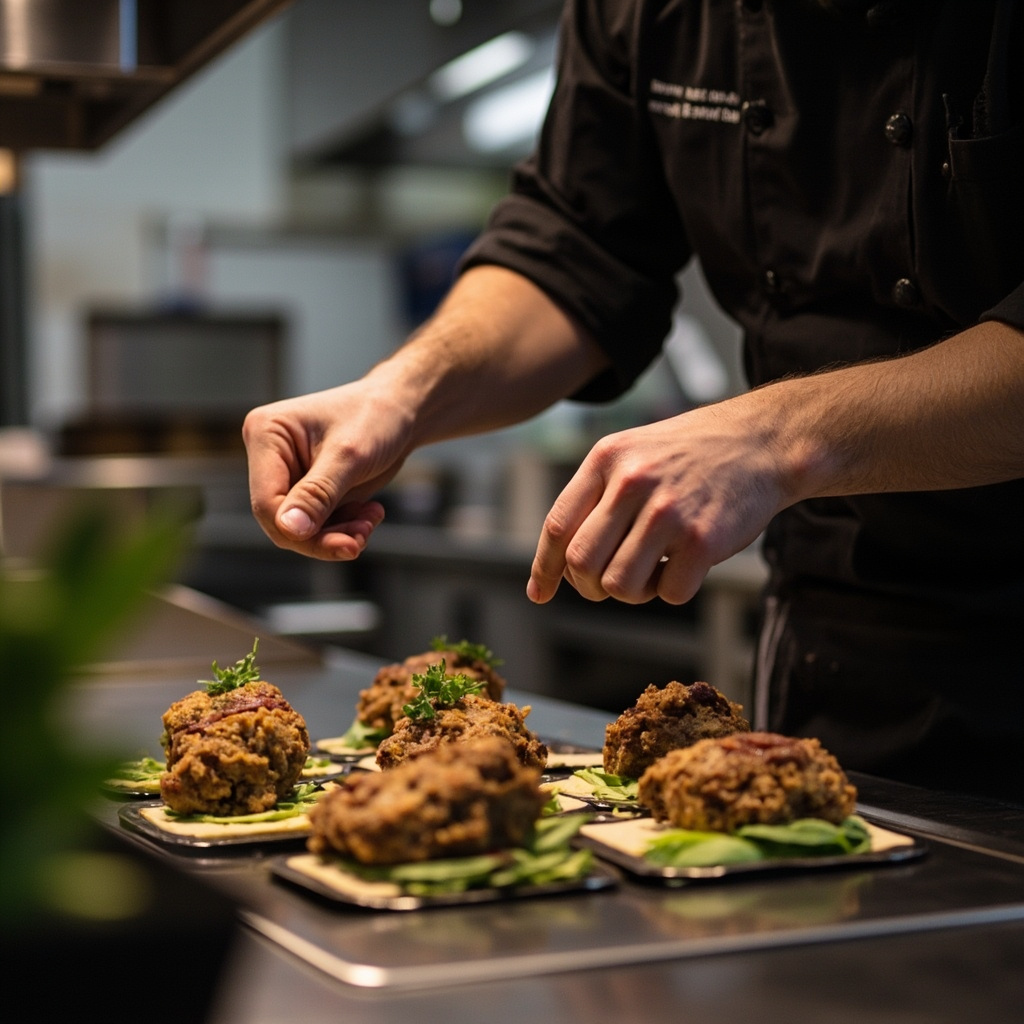
A chef, by contrast, works within a structured culinary brigade or kitchen team, holds or is working toward a formal qualification such as SIT30821 or SIT40521, and is trained across the full range of classical culinary techniques, menu engineering, food cost management, and kitchen leadership. Melbourne's fine dining and bistro sector — the establishments that drive the city's international culinary reputation — operates almost exclusively with qualified chefs at every station. The city's top hospitality employers, from diner-style venues in the CBD to paddock-to-plate restaurants in the Yarra Valley, treat the chef qualification as the baseline for serious kitchen roles.
According to the Restaurant Institute of Australia (RIA), the formal distinction matters most when it comes to employment contracts, industrial awards, and promotion pathways. Under the Restaurant Industry Award 2020, qualified cooks and chefs sit in different classifications with different minimum pay rates — and this formal structure shapes how Melbourne's larger hospitality operators structure their kitchen teams.
"I always tell my SIT30821 students in Melbourne: the qualification does not make you a chef automatically — but it makes you a qualified cook, and that is a materially different position in the job market.Melbourne employers know the difference and they pay accordingly."
— Sanjeev Kumar, Hospitality and Cookery Trainer, Clinton Institute (RTO ID: 41597, CRICOS: 03540C)
The Qualification Pathway: SIT30821, SIT40521, and What Each Stage Means
The Australian cookery qualification system is structured across three main levels, and understanding what each qualification actually qualifies you to do is essential for making smart career decisions in Melbourne's hospitality market.
SIT30821 Certificate III in Commercial Cookery (CRICOS: 109852F) is the foundation qualification. It covers the core competencies of a commercial kitchen: knife skills across all cuts, mother sauces and derivative sauces, classical and contemporary cookery methods, dietary modifications and food allergies, and the basics of kitchen hygiene and safety. At Clinton Institute's Melbourne campus (Level 9, 313 La Trobe Street), SIT30821 students also complete a structured industry placement component — giving them real commercial kitchen hours alongside their theory. This qualification qualifies you to work as a commi chef or line cook in any commercial kitchen in Melbourne. It is the baseline expectation for any chef role advertised in the city.
SIT40521 Certificate IV in Kitchen Management (CRICOS: 110553H) moves you into kitchen leadership. The curriculum covers roster planning, staff supervision, food cost control, menu costing, procurement, and the更高层次厨房管理 skills that SIT30821 does not address. This is the qualification that Melbourne hospitality employers look for when promoting to sous chef and kitchen manager roles. If your career goal is to run a kitchen — or even co-own a hospitality venue — SIT40521 is the minimum formal requirement in Melbourne's professional hospitality sector.
SIT50422 Diploma of Hospitality Management (CRICOS: 110554G) is the strategic layer — it covers hospitality operations management, business planning, financial management, and the high-level leadership skills needed for venue management, hotel food and beverage direction, or hospitality area management roles. Many of Melbourne's most successful hospitality professionals — those who own or operate multiple venues — hold SIT50422 or its equivalent.
Melbourne's employment data from Seek.com.au and Indeed.com.au for 2026 shows that chef roles at the sous chef level and above specifically require SIT40521 or equivalent in over 78% of advertised positions across the city's hospitality sector. For head chef and executive chef roles, that figure rises above 90%. This is not bureaucratic gatekeeping — it reflects the reality that managing a commercial kitchen in Melbourne requires formal training alongside experience.
Pay Rates: What the Restaurant Industry Award Actually Says in 2026
Under the Restaurant Industry Award 2020, as adjusted by the Fair Work Commission's 2025-2026 annual wage review, the minimum weekly full-time base rate for a qualified cook at Level 3 (food and beverage tradesperson — qualified cook/chef) is approximately $1,056 per week. For an unqualified kitchen hand or cook at Level 2, the minimum is approximately $963 per week. The gap compounds over a year and is even more significant in casual or overtime contexts.
In Melbourne's premium hospitality sector — fine dining in the CBD, award-winning inner-suburban restaurants, hotel kitchens — the commercial reality goes well beyond the Award minimum. A commi chef at a respected Melbourne bistro typically earns $65,000-$75,000 annually. A demi chef, $72,000-$82,000. A sous chef, $80,000-$95,000. A head chef at a medium-sized venue, $90,000-$110,000. These figures are drawn from Clinton Institute's ongoing engagement with our employer network across Melbourne's hospitality sector and reflect the 2026 market as of the first quarter.
The key insight for anyone considering a cookery qualification in Melbourne is that the wage premium for being formally qualified — versus being an experienced but unqualified cook — consistently pays back the cost of the qualification within the first 12-18 months of employment. SIT30821 at Clinton Institute (RTO ID: 41597, CRICOS: 03540C) is an investment in your earning curve, not just your skill set.
Career Progression: The Melbourne-Specific Path from Kitchen Hand to Head Chef
Melbourne's hospitality sector has a distinctive internal promotion culture. Unlike some other cities where restaurants recruit head chefs externally, Melbourne venues — from small Fitzroy bistros to large Southbank hospitality groups — consistently promote from within. This means the kitchen hand who starts at a Melbourne venue, gains their SIT30821 while working, and demonstrates consistent competence is often faster-tracked to senior roles than external candidates with formal qualifications but no venue-specific track record.
The typical progression looks like this: kitchen hand or kitchen assistant (no qualification required, often the entry point for SIT30821 students) → line cook or commi chef (SIT30821 completed or in-progress, working under the supervision of a more senior chef) → demi chef (SIT30821 complete plus 2-4 years of progressive experience) → sous chef (SIT40521 in progress or completed, managing a full kitchen section) → head chef (SIT40521 or SIT50422, full kitchen P&L responsibility) → executive chef or venue owner (SIT50422 plus years of senior management experience).
Clinton Institute's cookery students in Melbourne regularly move through the first three stages while still completing their qualifications — which is why our placement program is designed not just to give students hours, but to connect them with employer networks in Melbourne who are actively looking to promote from within. The placement at a Melbourne venue is frequently the beginning of an ongoing employment relationship.
Can You Become a Chef Without Formal Qualifications? The Melbourne Reality
There is no legal requirement to hold a formal qualification to be called a chef in Australia — unlike trade occupations such as electrical or plumbing work, there is no government-mandated apprenticeship or registration requirement for culinary professionals. In practice, however, Melbourne's commercial hospitality sector has effectively made SIT30821 the baseline for professional kitchen roles at the commi level and above.
Some owner-operated Melbourne restaurants — particularly in the inner-north and inner-west suburbs where the food scene is more informal — do hire and promote experienced cooks without formal qualifications. If you have worked your way up through a Melbourne kitchen over 8-10 years, you may have competencies that match or exceed someone with a fresh qualification. However, this path has a structural ceiling. Without SIT40521, progression to head chef or kitchen manager roles at larger Melbourne hospitality operators is significantly harder, because those operators need evidence of formal management training for their HR and industrial relations compliance.
Clinton Institute's Recognition of Prior Learning (RPL) pathway is specifically designed for this situation — experienced cooks in Melbourne who have the practical skills but not the formal piece of paper. RPL allows you to get credit for the units you already have competency in, and only complete the units you need to formalise. This can reduce the time and cost of getting your SIT30821 or SIT40521 significantly for those who already have kitchen experience in Melbourne's hospitality sector.
Frequently Asked Questions
Frequently Asked Questions
Ready to start your professional cookery qualification in Melbourne?
Clinton Institute (RTO ID: 41597, CRICOS: 03540C) offers SIT30821 Certificate III in Commercial Cookery, SIT40521 Certificate IV in Kitchen Management, and SIT50422 Diploma of Hospitality Management at our Melbourne campus. Apply now or contact our admissions team.
Clinton Institute is a registered training organisation (RTO ID: 41597, CRICOS: 03540C). Learn more about us.