
Clinton Institute


Your future starts here
Real Skills. Real Careers. A Smarter Alternative to University.
Completing Year 12 is an important milestone, but university is not the only pathway to a rewarding career. At Clinton Institute in Melbourne, international high school graduates can explore practical vocational education in Commercial Cookery, Aged Care and Community Services.
Discover career-focused qualifications, hands-on learning opportunities and study pathways designed to help you develop practical skills for your future.
Explore Your Career Pathways Speak With a Course Advisor
For international students aged 18 and over ready to explore their next step. Clinton Institute · RTO 41597 · CRICOS 03540C · Melbourne CBD campus.
Explore your options
Choosing your path after Year 12 is a big decision. Here are the main options, and what each one is genuinely like — so you can pick the one that fits your career goals, your learning style and your family’s budget.
A degree in a specific discipline, taught mainly through academic study, exams and written assessment.
Practical, competency-based training assessed on what you can actually do in the workplace, not only on paper.
A package enrolment that stacks several qualifications into one, so you can build a longer-term career one step at a time.
None of these options is automatically the right one. University suits students heading for a specific profession; vocational education suits students who want practical skills and placement hours; a package suits students already clear on the sector they want to work in.
Make an informed choice
Compare the two routes on the things that actually affect a decision, so you and your family can weigh them honestly.
| Consideration | University | Vocational Education (Clinton Institute) |
|---|---|---|
| Learning style | Mostly academic, with written assessment and exams | Practical and competency-based, with work placement inside the qualification |
| Duration | Bachelor degrees usually run three to four years | Set by the qualification and package you enrol in, from 13 weeks to 108 weeks |
| Tuition | Varies by university, degree and whether you are onshore or offshore | Published per qualification and per package for 2027, with enrolment and material fees listed |
| Practical training | Depends on the degree; some include placement, many do not | 120, 198 or 200 hours of supervised work placement, depending on the qualification |
| Career preparation | Preparation for a profession, with placement varying by course | Training for a specific sector: cookery, aged care or community services |
| Further study | Postgraduate pathways, subject to entry requirements | Clear progression from Certificate III to Certificate IV to Diploma to Advanced Diploma |
Free TAFE and subsidised places are for Australian citizens, permanent residents and New Zealand citizens. International students pay full CRICOS tuition.
The pathways
Explore three practical career pathways at Clinton Institute. Each one is a progression of nationally recognised qualifications you can enter after Year 11 or Year 12, and each one builds on the last.
Cook. Cook. Lead.
Build real culinary skills in Melbourne’s hospitality industry. No prior experience is needed — entry starts at Certificate III level with no ATAR.
Care. Empower. Connect.
Work in aged care and community support roles that make a real difference in people’s lives. Practical training happens in a simulated care environment before placement.
Work placement is a mandatory part of these qualifications and is arranged by Clinton Institute with providers including Arcare, Opal HealthCare and Benetas.
Make a Difference.
Support individuals, families and communities. Practical skills for meaningful work, including case management, crisis response and service coordination.
This Diploma covers case management and service coordination, but it does not by itself qualify you for every welfare or case management role. Employers set their own requirements, which can include other qualifications, supervised experience or registration. Ask the employer before you commit.
These pathways show potential progression through the qualification levels available at Clinton Institute. Availability, entry requirements, package combinations and 2027 intake dates are confirmed by admissions before you enrol.
The future of work
AI can automate tasks. It can plan menus, draft rosters and summarise notes. What it cannot do is stand in a kitchen and plate a hot order, or hold the hand of someone who is frightened. Here is what that means for each pathway.
AI may assist with menu planning, inventory and cost analysis. Food preparation, kitchen operations, quality control and teamwork still require practical skills on the line, at the pass, in the kitchen and in the dining room.
Technology may assist with administration, rostering and monitoring. Personal care, communication and empathy remain important, and they are the parts of the job that matter most to the people receiving support.
Technology may support documentation and information processing. Professional judgement, communication and interpersonal relationships remain essential, because the work is about people and their circumstances, not records.
Nobody can promise you that AI will or will not affect a particular job, and we will not pretend otherwise. Jobs and Skills Australia notes that its occupation projections do not yet reflect the labour market implications of generative AI. The Victorian outlook for 2025 to 2028 expects around 373,000 new workers, with about 87% of new workers needing a post-secondary school qualification and around 49% in occupations aligned with a VET qualification. Growth in an occupation is not a guarantee of a job for any graduate.
Why Clinton Institute
A CRICOS-registered training provider in the Melbourne CBD, teaching practical qualifications with work placement built into the qualification itself.
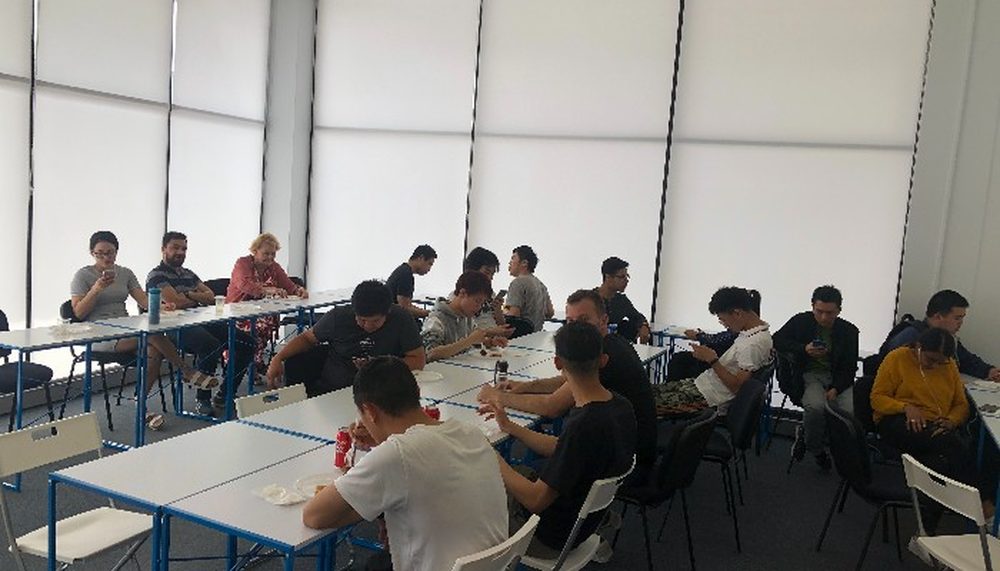
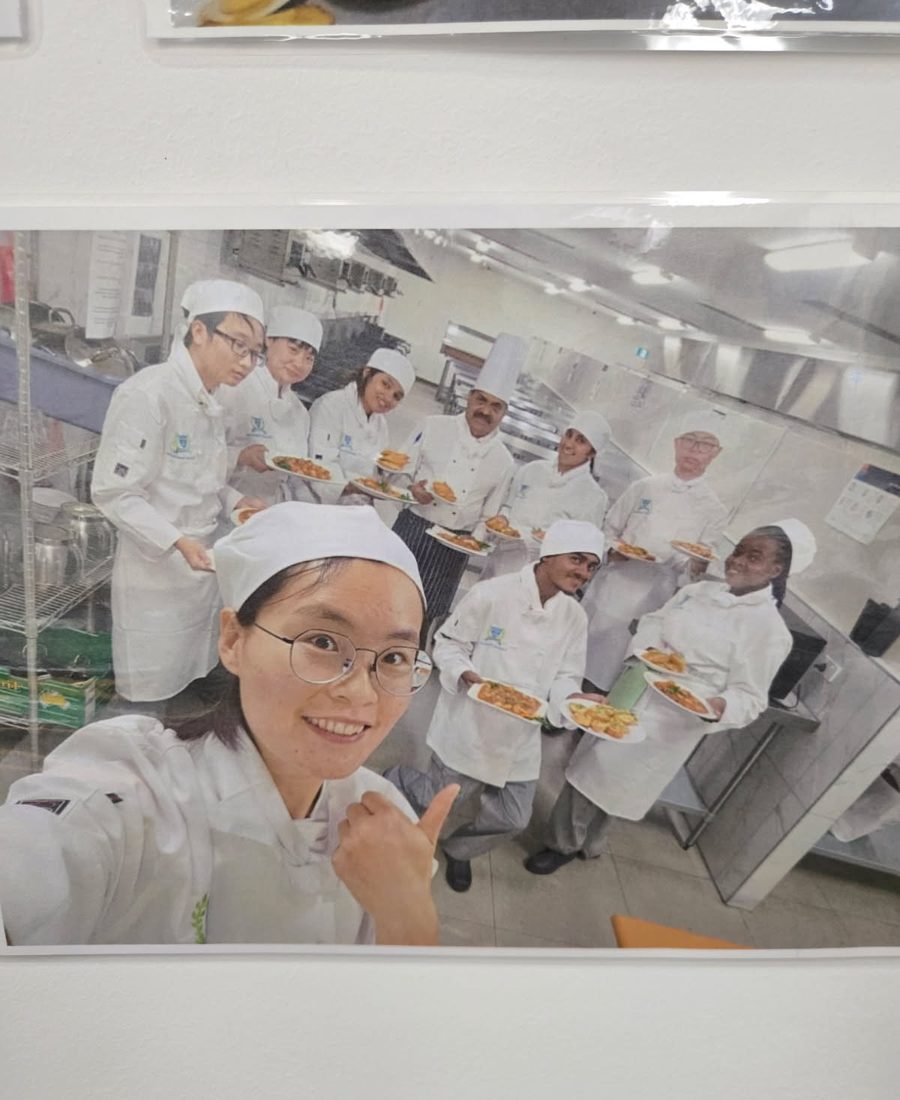
Your training environment
Every qualification at Clinton Institute is delivered from our Melbourne CBD campus at Level 9, 313 La Trobe Street, with practical training built into the course and supervised work placement arranged as part of it.
Education costs and long-term value
The cost of studying is one of the biggest decisions a family makes, so here is what to weigh up — and what to ask for before you commit to anything.
For 2027, international tuition ranges from $5,000 to $22,000 depending on the qualification, your visa status, and whether you take a single qualification or a package. A $300 enrolment fee and a $300 material fee apply to each course, and cookery students in SIT30821 Certificate III in Commercial Cookery or SIT40521 Certificate IV in Kitchen Management pay a one-off equipment fee of $1,550 at course start.
Duration matters as much as price. CHC33021 Certificate III in Individual Support runs a 13-week fast track or a 26-week standard path, while SIT60322 Advanced Diploma of Hospitality Management runs 108 weeks. Work placement hours sit inside the qualification: 120 hours for CHC33021 Certificate III in Individual Support, 198 hours for SIT30821 Certificate III in Commercial Cookery, and 200 hours for CHC52025 Diploma of Community Services.
No Clinton Institute course is automatically cheaper than every university degree, and we will not claim one is. Compare the published fee sheet for the specific qualification you are considering against the specific degree you have in mind, and factor in what you want to be doing at the end of it.
For parents and families
If your child is finishing school in Melbourne, they have options, and the decision is a family one. Here is what we can tell you.
Australian VET qualifications are nationally recognised and are listed on the national register, training.gov.au, under Clinton Institute as RTO 41597. They are recognised across Australia, which means they travel with your child if they move, and they stack into higher-level VET qualifications.
2027 international tuition and every enrolment and material fee are published on our Intakes and Prices page, with payment options and instalment plans on the Payment Options page. Free TAFE and subsidised places are for Australian citizens, permanent residents and New Zealand citizens, so international students pay full CRICOS tuition. Orientation, student support and pre-departure information are published for every student.
The same entry requirements apply to every student, domestic and international: at least 18 years old at course commencement, completed Year 11 or an equivalent overseas qualification, English at IELTS 6.0 overall or an accepted equivalent, and a Language, Literacy and Numeracy assessment. CHC33021 Certificate III in Individual Support and SIT30821 Certificate III in Commercial Cookery also require a valid subclass 500 student visa as a condition of entry for international students.
Work placement is included in the qualification and arranged by Clinton Institute, with aged care providers including Arcare, Opal HealthCare and Benetas, and commercial kitchens across Melbourne for the cookery stream. Your child can also progress into further qualifications without starting again.
Your next step
Five steps, and admissions supports you through each of them.
Admission is subject to academic, English language, age and other applicable entry requirements. Completing Year 12 does not automatically guarantee admission, and it does not decide student visa eligibility — visa assessment is separate, and you should speak to an OMARA-registered migration agent about your own situation.
Start a conversation
Tell us about your current studies and career interests. Our admissions team can help you explore suitable vocational education pathways.
There is no obligation and no application fee at this stage. We will confirm the current position on entry requirements, intakes and fees for the qualifications you are considering.
Clinton InstituteFrequently asked questions
The questions students and parents ask us most, answered plainly.
Three main routes. University gives you an academic degree in a specific discipline. Vocational education and training, or VET, gives you a nationally recognised qualification built around practical work and work placement. You can also combine study with a Certificate III or Certificate IV in a field such as cookery, aged care or community services and move on to a diploma later. At Clinton Institute in Melbourne the CRICOS-registered options are CHC33021 Certificate III in Individual Support, CHC43015 Certificate IV in Ageing Support, CHC52025 Diploma of Community Services, SIT30821 Certificate III in Commercial Cookery, SIT40521 Certificate IV in Kitchen Management, SIT50422 Diploma of Hospitality Management and SIT60322 Advanced Diploma of Hospitality Management. Entry to these qualifications does not use an ATAR.
Yes. Many international students in Melbourne choose a vocational college, and it is a legitimate route rather than a fallback. What matters is that the qualification matches the work you want to do. A Certificate III or Certificate IV in aged care or commercial cookery is built around hands-on training and assessed on what you can actually do, and every Clinton Institute qualification listed on this page includes work placement inside the qualification. If you are still unsure, an admissions advisor can talk through what each one leads to.
For CRICOS Certificate III entry at Clinton Institute, an ATAR is not used. What is required is completed Year 11 in Australia or an equivalent overseas qualification, English at IELTS 6.0 overall or an accepted equivalent, and a Language, Literacy and Numeracy assessment, and you must be at least 18 years old at course commencement. A lower ATAR does not close these routes. Our guide to low-ATAR CRICOS courses explains which qualifications are open to you and what you need to show.
Yes. SIT30821 Certificate III in Commercial Cookery is open to international students who have completed Year 11 or Year 12, are at least 18 years old, and meet the English requirement. It runs for 52 weeks and includes 198 hours of work placement in commercial kitchens across Melbourne. SIT40521 Certificate IV in Kitchen Management follows at 78 weeks, SIT50422 Diploma of Hospitality Management at 92 weeks, and SIT60322 Advanced Diploma of Hospitality Management at 108 weeks, with shorter durations possible where you bring in credit.
Yes. CHC33021 Certificate III in Individual Support has a 13-week fast track and a 26-week standard path inside its published 28-week CRICOS duration, and both include the same 120 hours of supervised work placement arranged by Clinton Institute with aged care providers including Arcare, Opal HealthCare and Benetas. CHC43015 Certificate IV in Ageing Support follows at 52 weeks with 120 placement hours, and CHC52025 Diploma of Community Services runs at 78 weeks with 200 hours. Subclass 500 student visa holders can choose either the standard path or the fast track.
University is predominantly academic: you are assessed through exams, written work and practical assessments for a degree in a discipline. VET is competency-based: you are assessed on the skills the job actually requires, and you build those skills in class, in a training environment and on placement. The other practical differences are duration, cost and what happens afterwards, and they are set out in the comparison table on this page. Neither is better than the other. They suit different careers, learning styles and budgets.
Yes. Australian VET qualifications are recognised across Australia and are listed on the national register, training.gov.au, under the training provider. Clinton Institute is RTO 41597 and CRICOS provider 03540C, and its qualifications are listed under that provider. Because the qualifications are nationally recognised they are portable, and they also give you a clear route into higher-level VET qualifications such as the Certificate IV, the Diploma and the Advanced Diploma.
For 2027, international tuition ranges from $5,000 to $22,000 depending on the qualification, your visa status, and whether you take a single qualification or a package. On top of tuition, a $300 enrolment fee and a $300 material fee apply to each course, and students enrolling in SIT30821 Certificate III in Commercial Cookery, SIT40521 Certificate IV in Kitchen Management or the SIT30821 and SIT40521 package pay a one-off equipment fee of $1,550 at course start. Every qualification's tuition fee, duration, CRICOS code and work placement hours are published on our Intakes and Prices page.
Yes. The qualifications here stack. SIT30821 Certificate III in Commercial Cookery leads to SIT40521 Certificate IV in Kitchen Management, then SIT50422 Diploma of Hospitality Management, then SIT60322 Advanced Diploma of Hospitality Management. CHC33021 Certificate III in Individual Support leads to CHC43015 Certificate IV in Ageing Support, then CHC52025 Diploma of Community Services. A package enrolment combines two, three or four qualifications into one enrolment. Where you bring in credit, your duration and tuition are calculated from the units you actually enrol in, so they can be shorter than the published figures.
Yes, and Year 11 is the right time to do it. Every course on this page requires you to be at least 18 years old at course commencement and to have completed at least the equivalent of Year 11, so most Year 11 students enrol after finishing school rather than part-way through it. Use Year 11 to compare the three streams, sit your English test, understand how work placement works, and talk to admissions about 2027 intake dates for the qualification that fits the career you want.
Course entry English is set by Clinton Institute: IELTS 6.0 overall, or an accepted equivalent such as TOEFL iBT, PTE, Duolingo or Cambridge English. You can also qualify through a recognised ELICOS pathway with an exit score of IELTS 6.0 equivalent, or by having completed Year 12 or equivalent in English. Every student completes a Language, Literacy and Numeracy assessment before enrolment. The subclass 500 student visa English requirement is a separate test set by the Department of Home Affairs, and meeting the course entry requirement does not change it.
That is a visa question, and it is assessed separately from your course application. Since 2 October 2026 most Student visa applications must be lodged outside Australia, and a subclass 600 visitor visa holder cannot switch to a student visa while in Australia, with limited exemptions. Genuine Student assessment looks at your course, your study record and your circumstances. Clinton Institute is a training provider, not a migration agent, so speak to an OMARA-registered migration agent about your own case before you enrol.
Clinton Institute | RTO ID: 41597 | CRICOS Provider: 03540C
Level 9, 313 La Trobe Street, Melbourne VIC 3000 | Phone: +61 3 8394 2064 | Email: admission@clinton.edu.au